
Good morning!
I like to have a glass of wine or two when I'm working on a new project. Do I drink because I write or do I write because I drink?I'm not sure this list is going to answer that question, but I found this on Listopia, and thought I should share. Hey, if you're a writer, and you like an adult beverage, you might be on your way to literary greatness.
Top 15 Great Alcoholic Writers
15. Hunter Thompson

Hunter Stockton Thompson (July 18, 1937 – February 20, 2005) was an American journalist and author, famous for his novel Fear and Loathing in Las Vegas. On July 21, 1981, in Aspen, Colorado, Thompson ran a stop sign at 2 am and began to “rave” at a state trooper. He also refused to take alcohol tests. Because of his refusal he was detained, although during a trial the drunk-driving charges against the journalist were dropped because there was no basis for the charges.
14. Raymond Chandler
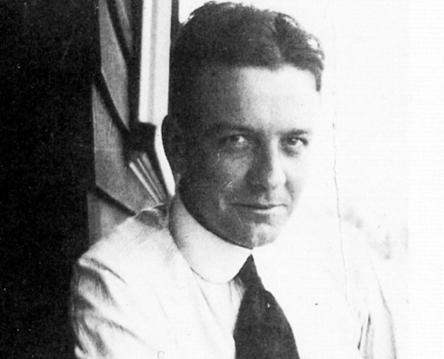
Raymond Thornton Chandler (July 23, 1888 – March 26, 1959) was an author of crime stories and novels of immense stylistic influence upon modern crime fiction, especially in the style of the writing and the attitudes now characteristic of the genre. His most famous character is Philip Marlowe. Chandler abused alcohol for the entire duration of his writing career.
13. John Cheever

John Cheever (May 27, 1912–June 18, 1982) was an American novelist and short story writer, sometimes called “the Chekhov of the suburbs” or “the Ovid of Ossining.” A compilation of his short stories, The Stories of John Cheever, won the 1979 Pulitzer Prize for Fiction. A combination of his extreme alcoholism and inability to cope with being bisexual, Cheever sought the advice of a therapist who said: “[Cheever] is a neurotic man, narcissistic, egocentric, friendless, and so deeply involved in [his] own defensive illusions that [he has] invented a manic-depressive wife.” He eventually won the battle against Alcohol and began a relationship with a male student.
12. O. Henry

O. Henry is the pen name of American writer William Sydney Porter (September 11, 1862 – June 5, 1910). Porter’s 400 short stories are known for their wit, wordplay, characterization and the clever use of twist endings. A prolific writer, often turning out a story a week, he kept his real identity a secret as his fame as O. Henry grew. A failure at business, a spendthrift, and finally an alcoholic, he died in poverty on June 5, 1910.
11. Tennessee Williams

Thomas Lanier Williams III (March 26, 1911 – February 25, 1983), better known by the nickname Tennessee Williams, was a major American playwright of the twentieth century who received many of the top theatrical awards for his work. One of Williams’ most enduring works, Cat On A Hot Tin Roof, included references to elements of his life such as homosexuality, mental instability and alcoholism.
10. Dylan Thomas

Dylan Marlais Thomas (27 October 1914 – 9 November 1953) was a Welsh poet. He is regarded by many as one of the 20th century’s most influential poets. His best known works include “Under Milk Wood” and “Do not go gentle into that good night”. He liked to boast about his drinking and said: “An alcoholic is someone you don’t like, who drinks as much as you do.” Thomas’ health rapidly began to deteriorate as a result of his drinking; he was warned by his doctor to give up alcohol but he carried on regardless. On 3 November 1953, Dylan Thomas and Liz Reitell, celebrated his 39th birthday and the success of 18 Poems. On November 5, Dylan Thomas was quaffing a few beers with Liz Reitell at the White Horse Tavern, Greenwich Village, Manhattan, when he started to feel ill. He slipped in to a coma and died four days later.
9. Dorothy Parker

Dorothy Parker (August 22, 1893 – June 7, 1967) was an American writer and poet, best known for her caustic wit, wisecracks, and sharp eye for 20th century urban foibles. Parker survived three marriages (two to the same man) and several suicide attempts, but grew increasingly dependent on alcohol. Although she would come to dismiss her own talents and deplore her reputation as a “wisecracker,” her literary output and her sparkling wit have endured long past her death.

Edgar Allan Poe (January 19, 1809 – October 7, 1849) was an American poet, short-story writer, editor, and literary critic, and is considered part of the American Romantic Movement. Best known for his tales of mystery and the macabre, Poe was one of the earliest American practitioners of the short story and invented the detective-fiction genre. On October 7, 1849, at age 40, Poe died in Baltimore; the cause of his death is unknown and has been attributed to alcohol, brain congestion, cholera, drugs, heart disease, rabies, suicide, tuberculosis, and other agents.
7. Truman Capote

Truman Capote (30 September 1924 – 25 August 1984) was an American writer whose stories, novels, plays, and non-fiction are recognized literary classics, including the novella Breakfast at Tiffany’s (1958) and In Cold Blood (1965), which he labeled a “non-fiction novel.” While Capote was writing In Cold Blood, he would have a double martini before lunch, another with lunch and a stinger afterward. After he was arrested for drunken driving on Long Island, he went to Silver Hill, an expensive clinic in Connecticut for alcoholics. He could stay off the booze for three or four months, and then he went back on it. He appeared on a talk show; drunk and rambling. “I drink,” he said after one binge, “because it’s the only time I can stand it.”
6. Jack Kerouac

Jack Kerouac (March 12, 1922 – October 21, 1969) was an American novelist, writer, poet, and artist. Along with William S. Burroughs and Allen Ginsberg, he is amongst the best known of the writers (and friends) known as the Beat Generation. Kerouac died on October 21, 1969 at St. Anthony’s Hospital in St. Petersburg, Florida, one day after being rushed with severe abdominal pain from his St. Petersburg home by ambulance. His death, at the age of 47, resulted from an internal hemorrhage (bleeding esophageal varices) caused by cirrhosis of the liver, the result of a lifetime of heavy drinking.
5. William Faulkner

William Cuthbert Faulkner (September 25, 1897 – July 6, 1962) was an American novelist, film screenwriter, and poet whose works feature his native state of Mississippi. He is regarded as one of the most influential writers of the twentieth century and was awarded the 1949 Nobel Prize for Literature. Much has been made of the fact that Faulkner had a serious drinking problem throughout his life, but as Faulkner himself stated on several occasions, and as was witnessed by members of his family, the press, and friends at various periods over the course of his career, he did not drink while writing, nor did he believe that alcohol helped to fuel the creative process. It is now widely believed that Faulkner used alcohol as an “escape valve” from the day-to-day pressures of his regular life.
4. Charles Bukowski

Henry Charles Bukowski (August 16, 1920 – March 9, 1994) was an influential Los Angeles poet and novelist. Bukowski’s writing was heavily influenced by the geography and atmosphere of his home city of Los Angeles. His father was in and out of work during the Depression years and was a reputed tyrant, verbally and physically abusing his son throughout his childhood. It was perhaps to numb himself from his father’s abuse that Bukowski began drinking at the age of 13, initiating his life-long affair with alcohol.
3. F. Scott Fitzgerald

Francis Scott Key Fitzgerald (September 24, 1896 – December 21, 1940) was an American writer of novels and short stories, whose works have been seen as evocative of the Jazz Age, a term he himself allegedly coined. Fitzgerald had been an alcoholic since his college days, and became notorious during the 1920s for his extraordinarily heavy drinking, leaving him in poor health by the late 1930s. On the night of December 20, 1940, he had a heart attack, and the next day, December 21, while awaiting a visit from his doctor, Fitzgerald collapsed and died. He was 44.
2. James Joyce

James Augustine Aloysius Joyce (2 February 1882 – 13 January 1941) was an Irish expatriate writer, widely considered to be one of the most influential writers of the 20th century. He is best known for his landmark novel Ulysses (1922) and its highly controversial successor Finnegans Wake (1939). Joyce lived in Dublin for many years, binge drinking the whole time. His drinking episodes occasionally caused fights in the local pubs.
1. Ernest Hemingway

Ernest Miller Hemingway (July 21, 1899 – July 2, 1961) was an American novelist, short-story writer, and journalist. Nicknaming himself “Papa” while still in his 20s, he was part of the 1920s expatriate community in Paris known as “the Lost Generation”, as described in his memoir A Moveable Feast. Throughout his life, Hemingway had been a heavy drinker, succumbing to alcoholism in his later years during which time he suffered from increasing physical and mental problems. In July 1961, after being released from a mental hospital where he’d been treated for severe depression, he committed suicide at his home in Ketchum, Idaho with a shotgun.
Notable Omissions: Frederick Exley, Harry Crews, Jack London, Stephen King
This article is licensed under the GFDL. It uses and expands on material from Wikipedia.


 Beatrix Potter's first book, The Tale of Peter Rabbit, was rejected by several publishers, at least initially. But Potter was so driven to share her children's book, written for the son of her former governess, that she privately printed it starting in 1901. After finding success, Frederick Warne & Co. began printing it as a trade edition in 1902, and multiple reprints were issued in the years following. With more than 45 million copies sold, this self-published book is also one of the best-selling books of all time. The Frederick Warne publishing company went on to publish all of the books in Potter's 23 Tales series.
 Amanda Hocking and her wildly successful paranormal novels have made lots of news recently as a threat to the traditional publishing model,
  Edgar Allan Poe's first public work, Tamerlane and Other Poems, was commissioned by the author himself, turned over to a young printer who had previously only printed labels, flyers, and other small jobs. The 40-page book was pamphlet-sized, and it is believed that only 50 copies were printed, although some believe the actual number is as low as 20 or as high as 200. Tamerlane and Other Poems is considered to be one of the rarest first editions in American literature. So rare, in fact, that noted poetry anthologist Rufus Wilmot Griswold believed that it didn't even exist until one was found. It's believed that a total of 12 of these self-published editions still exist today. Poe's next book, Al Aaraaf, Tamerlane, and Minor Poems was picked up by publishers Hatch and Dunning, and Poe considered this to be his first book.
 With such an auspicious name, John Locke was bound to do something amazing, and he certainly did: Locke became the first author to sell more than a million e-books without a publishing deal, and he did it in just five months. Perhaps the most amazing part of Locke's success is that he did it all without an agent, publicist, or huge marketing budget. Locke's success is credited to his deep understanding of the audience he writes for, a natural skill for a man whose background is in niche marketing. After finding success and joining the Kindle Million Seller club, Locke signed a deal with Simon & Schuster to have print editions of his books sold and distributed by the publisher. Locke has also written a guide to becoming a successful self-published author: How I Sold 1 Million eBooks in 5 Months!, a title which has done quite well itself, currently ranked in the top 100 of both Kindle's Self Help and Success stores.
 You may not recognize Richard Nelson Bolles' name, but you most likely know his popular self-help book, What Color is Your Parachute?, which was self-published by Bolles starting in 1970. Bolles
  Cynics might say that it's easy to get published when your family owns a publishing house, but have no doubt that Paolini and his family put in hard work to self-publish his first book, Eragon. Paolini's parents owned a small, home-based publishing company, Paolini International, and after seeing the potential of their son's work, decided to publish the book. The entire family helped make Eragon a success, promoting the book in schools, libraries, and bookshops with the young Paolini dressed in a medieval costume. Things didn't go very well until the stepson of popular author Carl Hiaasen bought a copy of the book and shared it with his stepfather, who brought it to the Alfred A. Knopf publishing house, who contacted the Paolini family and offered to publish the book commercially. The book was on the New York Times Children's Books Best Seller list for 121 weeks, and was adapted into a feature film. He has since written three more highly acclaimed books.
 Would you buy a New Age spirituality book out of the trunk of an author's car? It sounds like a strange thing to do, but 100,000 people did, making James Redfield's The Clandestine Prophecy an incredibly successful book, despite being rejected by mainstream publishing houses. Warner Books eventually agreed to publish it, but not before author Redfield sold copies out of the trunk of his Honda, and not just a few: 100,000 of them. After packing up his bookstore in a trunk, Redfield's book became the No. 1 bestseller in 1996, and spent 165 weeks on the New York Times Bestseller list. All told, more than 20 million copies of The Clandestine Prophecy have been sold worldwide, and a film adaptation of the book was released in 2006.
 Irma Rombauer's The Joy of Cooking is in just about every kitchen you can find, as one of the world's most published cookbooks, in print continuously since 1936. But the cookbook started out as a privately published affair in 1931, with 3,000 copies created by label maker AC Clayton and illustrated by Rombauer's daughter. At the time, Rombauer was struggling emotionally and financial after her husband's suicide, and this was her way to support her family.
  It took JA Konrath's book, Origin, more than ten years to find an audience, after being rejected more than 50 (yes, really, 50) times by every major house in New York. But in September 2011, Konrath noted that he has sold tens of thousands of copies of the book in the Kindle store, where it was ranked #274 at the time. In all, Konrath collected nearly 500 rejection letters for his nine unpublished novels before being picked up by Hyperion. But that didn't happen before Konrath finally found an outlet for his writing through Amazon's self-publishing system. On his blog, A Newbie's Guide to Publishing, Konrath shares his secrets to becoming a successful self-published writer. Hint: it's perseverance, mixed with generous helpings of luck.
 Along with his student EB White, Cornell University professor of English William Strunk Jr. wrote and published The Elements of Style as a guide to address elementary rules of usage, principles of composition, and commonly misused and misspelled words and expressions. It was originally designed for in-house use at the university and was known as "the little book," emphasis on the little. But it didn't stay little forever, and the book has since been revised and republished to much success and use. In 2011, Time magazine listed The Elements of Style as one of the 100 best and most influential English language books since 1923, and it is easily recognized as one of the most widely read and used English style manuals. All told, more than ten million copies of this originally self-published book have been sold.