NOW AVAILABLE!

NOW AVAILABLE!
A HERO'S SPARK: the final book in the Wicked Women series!
Showing posts with label alcohol. Show all posts

Thursday, January 30, 2014

Do you drink? You might be a famous author in training!

Good morning!

I like to have a glass of wine or two when I'm working on a new project. Do I drink because I write or do I write because I drink?

I'm not sure this list is going to answer that question, but I found this on Listopia, and thought I should share.  Hey,  if you're a writer, and you like an adult beverage, you might be on your way to literary greatness.

Top 15 Great Alcoholic Writers

Jamie Frater

Many great writers of the 20th century (especially American writers) struggled with addictions to alcohol. Some believe that this may have contributed to their great artistic abilities, while others believe that the alcohol served as a medication for other problems in their lives. This is a list of the 15 greatest writers who were alcoholics.

15. Hunter Thompson
Image001
Hunter Stockton Thompson (July 18, 1937 – February 20, 2005) was an American journalist and author, famous for his novel Fear and Loathing in Las Vegas. On July 21, 1981, in Aspen, Colorado, Thompson ran a stop sign at 2 am and began to “rave” at a state trooper. He also refused to take alcohol tests. Because of his refusal he was detained, although during a trial the drunk-driving charges against the journalist were dropped because there was no basis for the charges.

14. Raymond Chandler
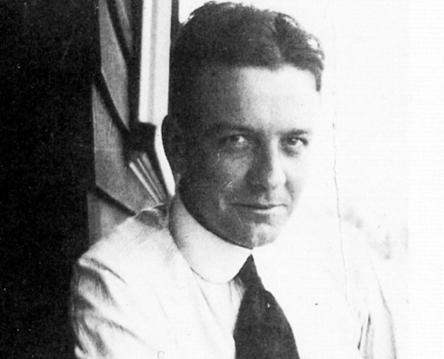
Chandler
Raymond Thornton Chandler (July 23, 1888 – March 26, 1959) was an author of crime stories and novels of immense stylistic influence upon modern crime fiction, especially in the style of the writing and the attitudes now characteristic of the genre. His most famous character is Philip Marlowe. Chandler abused alcohol for the entire duration of his writing career.

13. John Cheever
Cheever-2004Jul19L
John Cheever (May 27, 1912–June 18, 1982) was an American novelist and short story writer, sometimes called “the Chekhov of the suburbs” or “the Ovid of Ossining.” A compilation of his short stories, The Stories of John Cheever, won the 1979 Pulitzer Prize for Fiction. A combination of his extreme alcoholism and inability to cope with being bisexual, Cheever sought the advice of a therapist who said: “[Cheever] is a neurotic man, narcissistic, egocentric, friendless, and so deeply involved in [his] own defensive illusions that [he has] invented a manic-depressive wife.” He eventually won the battle against Alcohol and began a relationship with a male student.

12. O. Henry
Ohenry
O. Henry is the pen name of American writer William Sydney Porter (September 11, 1862 – June 5, 1910). Porter’s 400 short stories are known for their wit, wordplay, characterization and the clever use of twist endings. A prolific writer, often turning out a story a week, he kept his real identity a secret as his fame as O. Henry grew. A failure at business, a spendthrift, and finally an alcoholic, he died in poverty on June 5, 1910.

11. Tennessee Williams
463Px-Tennessee Williams With Cake Nywts
Thomas Lanier Williams III (March 26, 1911 – February 25, 1983), better known by the nickname Tennessee Williams, was a major American playwright of the twentieth century who received many of the top theatrical awards for his work. One of Williams’ most enduring works, Cat On A Hot Tin Roof, included references to elements of his life such as homosexuality, mental instability and alcoholism.

10. Dylan Thomas
Youngdylan
Dylan Marlais Thomas (27 October 1914 – 9 November 1953) was a Welsh poet. He is regarded by many as one of the 20th century’s most influential poets. His best known works include “Under Milk Wood” and “Do not go gentle into that good night”. He liked to boast about his drinking and said: “An alcoholic is someone you don’t like, who drinks as much as you do.” Thomas’ health rapidly began to deteriorate as a result of his drinking; he was warned by his doctor to give up alcohol but he carried on regardless. On 3 November 1953, Dylan Thomas and Liz Reitell, celebrated his 39th birthday and the success of 18 Poems. On November 5, Dylan Thomas was quaffing a few beers with Liz Reitell at the White Horse Tavern, Greenwich Village, Manhattan, when he started to feel ill. He slipped in to a coma and died four days later.

9. Dorothy Parker
Parker
Dorothy Parker (August 22, 1893 – June 7, 1967) was an American writer and poet, best known for her caustic wit, wisecracks, and sharp eye for 20th century urban foibles. Parker survived three marriages (two to the same man) and several suicide attempts, but grew increasingly dependent on alcohol. Although she would come to dismiss her own talents and deplore her reputation as a “wisecracker,” her literary output and her sparkling wit have endured long past her death.

 
8. Edgar Allen Poe
Jb Nation Poe 1 E
Edgar Allan Poe (January 19, 1809 – October 7, 1849) was an American poet, short-story writer, editor, and literary critic, and is considered part of the American Romantic Movement. Best known for his tales of mystery and the macabre, Poe was one of the earliest American practitioners of the short story and invented the detective-fiction genre. On October 7, 1849, at age 40, Poe died in Baltimore; the cause of his death is unknown and has been attributed to alcohol, brain congestion, cholera, drugs, heart disease, rabies, suicide, tuberculosis, and other agents.

7. Truman Capote
Capote Pic
Truman Capote (30 September 1924 – 25 August 1984) was an American writer whose stories, novels, plays, and non-fiction are recognized literary classics, including the novella Breakfast at Tiffany’s (1958) and In Cold Blood (1965), which he labeled a “non-fiction novel.” While Capote was writing In Cold Blood, he would have a double martini before lunch, another with lunch and a stinger afterward. After he was arrested for drunken driving on Long Island, he went to Silver Hill, an expensive clinic in Connecticut for alcoholics. He could stay off the booze for three or four months, and then he went back on it. He appeared on a talk show; drunk and rambling. “I drink,” he said after one binge, “because it’s the only time I can stand it.”

6. Jack Kerouac
Kerouac-Jack
Jack Kerouac (March 12, 1922 – October 21, 1969) was an American novelist, writer, poet, and artist. Along with William S. Burroughs and Allen Ginsberg, he is amongst the best known of the writers (and friends) known as the Beat Generation. Kerouac died on October 21, 1969 at St. Anthony’s Hospital in St. Petersburg, Florida, one day after being rushed with severe abdominal pain from his St. Petersburg home by ambulance. His death, at the age of 47, resulted from an internal hemorrhage (bleeding esophageal varices) caused by cirrhosis of the liver, the result of a lifetime of heavy drinking.

5. William Faulkner
2636168
William Cuthbert Faulkner (September 25, 1897 – July 6, 1962) was an American novelist, film screenwriter, and poet whose works feature his native state of Mississippi. He is regarded as one of the most influential writers of the twentieth century and was awarded the 1949 Nobel Prize for Literature. Much has been made of the fact that Faulkner had a serious drinking problem throughout his life, but as Faulkner himself stated on several occasions, and as was witnessed by members of his family, the press, and friends at various periods over the course of his career, he did not drink while writing, nor did he believe that alcohol helped to fuel the creative process. It is now widely believed that Faulkner used alcohol as an “escape valve” from the day-to-day pressures of his regular life.

4. Charles Bukowski
Bukowski460
Henry Charles Bukowski (August 16, 1920 – March 9, 1994) was an influential Los Angeles poet and novelist. Bukowski’s writing was heavily influenced by the geography and atmosphere of his home city of Los Angeles. His father was in and out of work during the Depression years and was a reputed tyrant, verbally and physically abusing his son throughout his childhood. It was perhaps to numb himself from his father’s abuse that Bukowski began drinking at the age of 13, initiating his life-long affair with alcohol.

3. F. Scott Fitzgerald
Fsfitz2
Francis Scott Key Fitzgerald (September 24, 1896 – December 21, 1940) was an American writer of novels and short stories, whose works have been seen as evocative of the Jazz Age, a term he himself allegedly coined. Fitzgerald had been an alcoholic since his college days, and became notorious during the 1920s for his extraordinarily heavy drinking, leaving him in poor health by the late 1930s. On the night of December 20, 1940, he had a heart attack, and the next day, December 21, while awaiting a visit from his doctor, Fitzgerald collapsed and died. He was 44.

2. James Joyce
Bernice Abbott James Joyce 1926
James Augustine Aloysius Joyce (2 February 1882 – 13 January 1941) was an Irish expatriate writer, widely considered to be one of the most influential writers of the 20th century. He is best known for his landmark novel Ulysses (1922) and its highly controversial successor Finnegans Wake (1939). Joyce lived in Dublin for many years, binge drinking the whole time. His drinking episodes occasionally caused fights in the local pubs.

1. Ernest Hemingway
Hemingway-Ernest-Hemingway-Portret
Ernest Miller Hemingway (July 21, 1899 – July 2, 1961) was an American novelist, short-story writer, and journalist. Nicknaming himself “Papa” while still in his 20s, he was part of the 1920s expatriate community in Paris known as “the Lost Generation”, as described in his memoir A Moveable Feast. Throughout his life, Hemingway had been a heavy drinker, succumbing to alcoholism in his later years during which time he suffered from increasing physical and mental problems. In July 1961, after being released from a mental hospital where he’d been treated for severe depression, he committed suicide at his home in Ketchum, Idaho with a shotgun.

Notable Omissions: Frederick Exley, Harry Crews, Jack London, Stephen King

This article is licensed under the GFDL. It uses and expands on material from Wikipedia.

Saturday, June 16, 2012

Literary drinks for the drinking writer.

Good afternoon!

My friends at Online Education Database must have been reading my mind when they came up with this list of "25 Brilliant Literary Inspired Drinks."

It's no secret that many of the great authors of the past had some sort of addiction.  It's something my writer friends and I bring up at conferences as we are hoisting our second...fifth...glass of wine/martini/shot of something.  I'm not sure if writers write to escape their demon addictions or if they are addicted to different substances because writing, as a profession, can and will make you insane, if you aren't already sort of there.

I'm not one to follow in the path of Edgar Allen Poe, father of the modern short story...and horror in generalhen it comes to opium and that sort of thing...but I do like this list, and yes, I will feel ever so much more smarter when I order these at my next writer's conference.

Enjoy!

25 Brilliant & Literary-Inspired Mixed Drinks
Plenty of authors throughout history have drawn inspiration (or consolation, as it may be) from a bottle, and as such, there is no shortage of cocktails, concoctions, and libations that can be related to great books and their authors. Whether you're hosting a literary-themed party or just want to drink like your favorite author while you read one of his or her works, you certainly won't thirst for options (pun very much intended) when you read through this list of literary-inspired mixed-drinks. You'll find an assortment of titular puns, tributes to authors, and even a few favorites drawn from the lives of famous authors themselves to help you find the perfect bibliophile beverage.
  1. The Sir Walter Scott

    Historical novelist, playwright, and poet Sir Walter Scott was a Scottish patriot through and through, so we're not quite sure what this Hennessy-based (a French cognac) drink has to do with him. But it sure does sound good, mixing cognac, rum, triple sec, grenadine, and lime juice.
  2. The Longfellow

    The American poet Henry Wadsworth Longfellow is commemorated in this fresh and fruity drink, which blends tequila, cucumber, cilantro, and pineapple juice, a delicious mixture that is no divine tragedy.
  3. The Gryffindor

    Potter fans (at least those over 21) can indulge their booze tooth in this elaborate, color-themed cocktail. This very fruity drink is composed of cranberry juice and orange juice with just a dash of raspberry liqueur, topped with a cherry and a twist of orange peel.
  4. The Catcher in the Rye

    Break out the rye whiskey to put together this Salinger-themed drink that blends a solid whiskey with sherry, Grand Marnier, Torani Amer, and bitters. For a twist on the recipe, use vanilla-infused Angostura instead of the bitters.
  5. Bearded Mojito

    It's no secret that Ernest Hemingway enjoyed a good drink (or two or 10), even succumbing to alcoholism in his later years. Papa's poison of choice was the mojito (though whiskey would also do), a recipe for which you can easily copy at home.
  6. Faulkner's Mint Julep

    Calling this a cocktail is a bit of a stretch, but apparently William Faulkner liked his drinks pretty darn stiff (he once said, "I usually write at night. I always keep my whiskey within reach"). His recipe for a mint julep is just whiskey, ice, a teaspoon of sugar, and mint. Simple, but likely very effective in building up quite a buzz.
  7. Gin Fitzey

    The favorite drink of author and noted booze connoisseur F. Scott Fitzgerald is the Gin Rickey (which Fitzgerald apparently liked because he believed gin couldn't be smelled on his breath ... yeah right), which we prefer to call by the much more endearing name of the Gin Fitzey. To make it, you'll need gin, lime juice, club soda, and lime wedges. If that's not your style, you can also try to whip up a Great Gatsby.
  8. McCullers' Long Island

    Inspired by Carson McCullers' favorite drink, a concoction of tea and sherry that she drank throughout the day (often claiming it was only tea), this notoriously strong drink, when made right also gives the impression that it's just a simple, non-offensive tea. That is, until you wind up under the table. It blends no less than five different types of alcohol to pack a potent punch.
  9. Chandler's Gimlet

    One of the best-known stories about Raymond Chandler relates to his writing of the movie The Blue Dahlia, in which he purposely relapsed into alcoholism in order to break through his terrible writer's block and finish the script. You can drink to his insane dedication to writing (or his intense desire for a drink) by whipping up one of his favorites, the Gimlet.
  10. Pisco Sour

    Can't get enough of Truman Capote's Breakfast at Tiffany's? Take inspiration from the book, and Holly Golightly's epic parties, to mix up this drink, made of pisco, lemon juice, sugar, egg white, and bitters.
  11. Smoking Bishop

    At the end of A Christmas Carol, Ebenezer Scrooge declares, "We will discuss your affairs this very afternoon, over a Christmas bowl of smoking bishop, Bob!" So what the heck is smoking bishop? It's a type of hot, spiced wine, perfect for winter reading. Follow Charles Dickens' recipe to get it just right.
  12. The Tristram Shandy

    This punny name combines the classic shandy, made of beer and lemonade (or a citrusy soda), with the classic novel by Laurence Sterne. It might just inspire you to pen a tale, though hopefully a less long-winded one, about your own life story.
  13. Margarita Atwood

    We're not sure if author Margaret Atwood enjoys the occasional margarita, but it doesn't matter when her name fits so perfectly into this drink name. While the recipe we've linked takes a humorous view of a Margarita Atwood, you can find a more serious recipe here.
  14. Turn of the Screwdriver

    In Henry James' novella, Turn of the Screw, a young governess is tortured by seemingly supernatural figures, though the exact meaning and nature of her visions is never explained by the book. Whatever the case, this take on the classic screwdriver will help you to stave off any nightmares you might have after reading this (possible) ghost story.
  15. Bloody Stephen

    Many of Stephen King's novels are filled with bloody scenes, including, most notably, The Shining and Carrie, so it's only natural that a King-inspired drink would be blood red. Follow this very simple recipe from The New Yorker to enjoy a spooky evening at home.
  16. Stinging Rabbit

    John Updike's character Rabbit had a passion for Stingers, and you just might develop one too after making one at home. The recipe is incredibly simple, calling only for vodka and creme de menthe.
  17. Wilde About Absinthe

    Oscar Wilde wasn't shy about his enjoyment of this oft-maligned drink, once saying, "The first stage is like ordinary drinking, the second when you begin to see monstrous and cruel things, but if you can persevere you will enter in upon the third stage where you see things that you want to see, wonderful curious things." Absinthe has only recently become legal in the US, so now even Americans can enjoy a delicious cocktail like these from Epicurious.
  18. Bukowski Boilermaker

    Crude, rough-edged, and more often than not on a bender, Charles Bukowski more than likely wasn't an easy person to know, but he is an easy person to imitate when it comes to boozing it up. His favorite drink was a Boilermaker, which is quite simply a lager beer and a short of whiskey, either mixed in the glass or after putting both down the hatch.
  19. Sextontini

    Anne Sexton had an unabashed love of a good martini, and the famous drink even made it into her personal letters more than a few times as you can see from the link here. So, get a high-quality gin (no vodka, that's cocktail sacrilege), some extra dry vermouth, and some olives to make yourself a Sexton-worthy martini.
  20. Whiskey and Whiskey

    Dylan Thomas met his untimely demise at the bottom of a glass of whiskey, or more accurately, at the bottom of 18 glasses of whiskey. While it is perhaps uncouth to make light of this uncontrolled alcoholism, think of this drink, whiskey on the rocks with a shot of whiskey on the side, as paying tribute to the author instead.
  21. Dorothy Parker Sour

    Despite being an alcoholic, Dorothy Parker managed to have a pretty darn successful writing career, and one of her favorite drinks (sometimes even serving as her breakfast) was the whiskey sour. If you'd like to sample the iconic drink, combine whiskey, lemon juice, and sugar, serving with a lemon wedge and a cherry.
  22. Tennessee Fizz

    Tennessee Williams is one of America's best known and most celebrated playwrights, and he also enjoyed a good drink now and again. His drink of choice was a Ramos Fizz, a blend of dry gin, heavy cream, egg white, lemon juice, lime juice, sugar, and orange flower water.
  23. Gibson O'Neill

    Nobel Laureate Eugene O'Neill was no slouch when it came to writing nor when it came to drinking. He was known to head to the Garden Hotel in New York to get one of these classic cocktails, a blend of gin, dry vermouth, and cocktail onions, which O'Neill often spruced up with a splash of club soda.
  24. Old Fashioned Anderson

    Sherwood Anderson's writing influenced such big names as Hemingway, Faulkner, and Fitzgerald, and his propensity for drink may have been passed down as well. Anderson favored the Old Fashioned, a blend of whiskey, club soda, bitters, and sugar.
  25. Hangman's Blood

    This cocktail has several literary ties, first being described in Richard Hughes' novel A High Wind in Jamaica as a blend of rum, gin, brandy, and port that "has the property of increasing rather than allaying thirst, and so once it has made a breach, soon demolishes the whole fort." It would eventually become a favorite of novelist Anthony Burgess, who added in a few more types of alcohol for good measure (whiskey, stout, and champagne) to create a brew that would certainly give anyone enough liquid courage to be a hangman.